

Your Salary vs a Robot's: The Real Cost Comparison (2026)
The robot-versus-human debate is usually framed as a question of capability: can the robot do the job? That's the wrong question. The right question is: at what price point does the robot become the default choice even if it's only 80% as capable? For a growing list of professions, that price point has already been crossed.
WATCH THE VIDEO
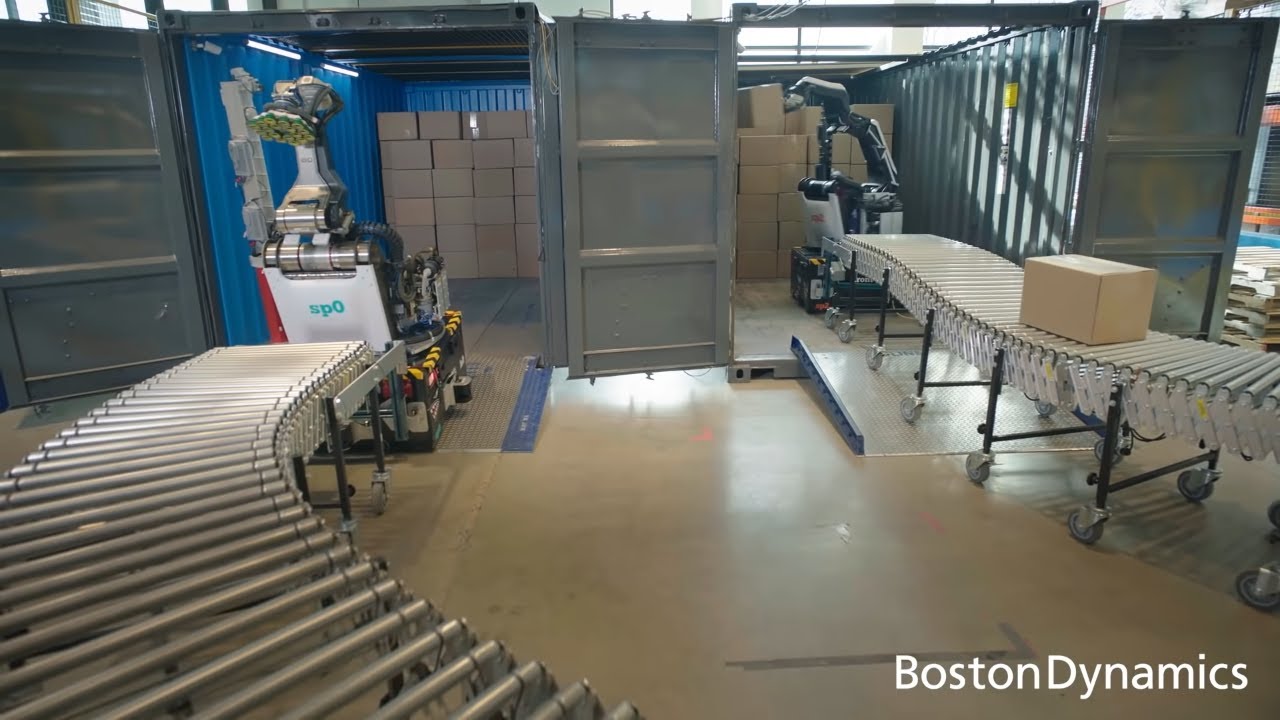
The Real Cost of a Human Worker
When companies calculate the cost of a human employee, the hourly wage is only part of it. The fully-loaded cost includes:
| Cost Component | Approximate Annual Cost (US) |
|---|---|
| Base salary (warehouse picker) | $38,000–$44,000 |
| Employer payroll taxes (~8%) | $3,000–$3,500 |
| Health insurance contribution | $6,000–$8,000 |
| Paid time off (10 days avg) | $1,500–$1,700 |
| Workers' compensation insurance | $1,200–$2,000 |
| Recruiting and onboarding | $1,500–$3,000 (amortised) |
| Training | $800–$1,500 |
| Turnover cost (avg 40% annual in logistics) | $5,000–$8,000 |
| Total fully-loaded annual cost | $57,000–$71,000 |
| Effective hourly rate (2,080 hours) | $27–$34/hr |
Sources: BLS Occupational Employment Statistics 2024; SHRM Turnover Benchmarks 2024; industry estimates
The gap between the $18 headline wage and the $27–34 fully-loaded cost is where robot economics become compelling long before robots match human capability.
The Real Cost of a Robot
Robot cost structures vary significantly by category. For warehouse automation — the clearest current comparison case:
| Cost Component | Annual Cost |
|---|---|
| Hardware amortisation (5-year life, $150K robot) | $30,000 |
| Maintenance and repairs (~10% of hardware) | $15,000 |
| Software licensing and updates | $8,000–$12,000 |
| Power consumption | $2,000–$3,000 |
| Integration and supervision (shared across fleet) | $3,000–$5,000 |
| Total annual cost | $58,000–$65,000 |
| Effective hourly rate (8,760 hours — 24/7 operation) | $6.60–$7.40/hr |
Sources: Industry estimates; Agility Robotics RaaS pricing; Amazon robotics deployment data
The critical difference is in the denominator. A human worker is available for approximately 2,080 hours per year (40 hours × 52 weeks, minus leave). A robot is available for 8,760 hours — every hour of every day. That 4.2× multiplier transforms the economics even when the per-hour hardware cost is similar.
Agility Robotics prices its Digit humanoid robot at approximately $10 per hour on a Robot-as-a-Service model — explicitly positioning against the human labour cost it replaces. That price will fall as deployment scales.
Where the Crossover Has Already Happened
The crossover point — where robot economics beat human labour economics even at lower capability — has already been passed in several categories:
| Profession | Human Fully-Loaded Cost | Robot Equivalent Cost | Crossover Status |
|---|---|---|---|
| Warehouse picker | $27–34/hr | $6–10/hr (RaaS) | ✓ Crossed |
| Floor cleaner (commercial) | $22–28/hr | $4–7/hr | ✓ Crossed |
| Assembly line (repetitive) | $28–38/hr | $8–14/hr | ✓ Crossed |
| Fast food fryer operator | $18–22/hr | $6–9/hr | ✓ Crossed |
| Lawn maintenance (commercial) | $20–26/hr | $5–8/hr | ✓ Crossed |
| Delivery driver (last-mile campus) | $24–30/hr | $3–5/hr | ✓ Crossed |
| Security patrol | $22–28/hr | $7–11/hr | ✓ Crossed |
| Surgical assistant | $35–50/hr | Not yet viable | ✗ Not crossed |
| Therapist | $45–80/hr | Not viable | ✗ Not crossed |
Sources: BLS OES 2024; IFR 2025; industry estimates. Robot costs based on current commercial deployment pricing.
WATCH THE VIDEO
Why Companies Are Still Hiring Humans
If the economics have crossed over, why are humans still employed in warehouses, on factory floors, and in commercial cleaning?
Three reasons slow the transition even when economics favour robots:
Capital deployment lag. Switching to robots requires upfront capital investment and operational change management. Companies don't replace existing human workforces overnight even when the long-term economics are clear. They automate at the margin — hiring robots instead of humans for new capacity, reducing headcount through attrition.
Capability gaps at the edges. Current robots handle the core repeatable tasks well and struggle with edge cases. A warehouse picking robot handles 95% of SKUs efficiently and requires human intervention for the remaining 5%. Until that gap closes further, mixed human-robot operations remain the norm.
Regulatory and reputational friction. Mass layoffs driven by robot adoption attract regulatory and media attention. Most large employers manage automation through attrition and redeployment rather than direct replacement, which extends the transition timeline.
The trajectory is clear even if the speed is constrained. See which jobs score highest on the Geppetto Jobs Index →
The Humanoid Wild Card
Every cost calculation above assumes purpose-built robots — machines designed for one specific task. Humanoid robots change the calculation by introducing task flexibility: a single robot platform that can be software-updated to perform different tasks without hardware replacement.
A humanoid robot at $10/hour that can clean floors in the morning, restock shelves at noon, and handle warehouse sorting at night is not competing against a floor-cleaning robot. It's competing against three separate human workers. The economics of flexibility, once humanoid capability reaches sufficient reliability, accelerate the crossover across a much wider range of professions simultaneously.
That inflection point is not 2026. It is, on current trajectories, somewhere in the 2028–2032 window. Browse humanoid robots →
WATCH THE VIDEO
Frequently Asked Questions
How much does a robot cost per hour compared to a human worker?
Current commercial warehouse robots operate at approximately $6–10 per hour on a fully-loaded basis including hardware amortisation, maintenance, and software. The average US warehouse worker costs $27–34 per hour fully loaded including benefits, taxes, and turnover costs. The robot advantage is amplified by 24/7 availability — a robot works 8,760 hours per year versus a human's approximately 2,080.
At what point does it make economic sense to replace a human with a robot?
The economic crossover depends on three variables: the fully-loaded human cost, the robot's total cost of ownership, and the robot's effective operating hours relative to a human. For repetitive physical tasks in logistics, manufacturing, and commercial cleaning, that crossover has already occurred at current robot price points. For tasks requiring dexterity, judgment, or unstructured environments, it has not.
Do robots really cost only $10 per hour?
Agility Robotics' Digit is offered on a Robot-as-a-Service model at approximately $10 per hour, explicitly benchmarked against human labour costs. Purpose-built warehouse and cleaning robots operate at $4–7 per hour on a fully-loaded basis. These costs are expected to continue falling as deployment scales and hardware costs decline.
Why are companies still hiring humans if robots are cheaper?
Three factors slow adoption even when economics favour robots: capital deployment lag (switching costs and change management), capability gaps in edge cases that still require human judgment, and regulatory and reputational friction around mass automation.
Data sources: BLS Occupational Employment Statistics 2024; SHRM Turnover Benchmarks 2024; IFR World Robotics 2025; Agility Robotics pricing data; industry estimates. Last updated: March 2026.