Metropolis and the Machine Human (1927 film)
Metropolis is a 1927 German science fiction film directed by Fritz Lang and written by Thea von Harbou. Set in a futuristic urban dystopia, the narrative centers on a robotic creation known as the Machine Human, which an inventor crafts in the likeness of a woman to manipulate the city workers.
Watch a clip
Metropolis (1927), Official Theatrical Trailer, Kino Lorber, embedded from YouTube. Watch on YouTube
Independent fan reference. Not affiliated with the rights holders.
Public-domain art
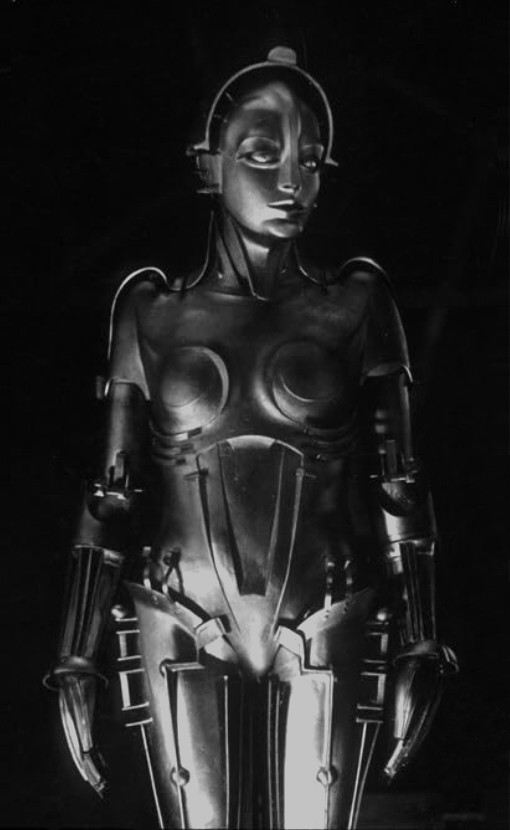
Horst von Harbou, set photograph of the Maschinenmensch from Metropolis, 1926. Public domain (Wikimedia Commons). Source: Wikimedia Commons, accessed 19 November 2026. View on Wikimedia Commons
Independent fan reference. Not affiliated with the rights holders.
Facts at a glance
- Title
- Metropolis
- Medium
- film
- Release Date
- 10 January 1927
- Director
- Fritz Lang
- Studio
- UFA
- Country
- Germany
- Robot Character
- The Machine Human
- Performer
- Brigitte Helm
What is Metropolis, and why do fans love its robots?
Metropolis is a silent expressionist film from the Weimar period. Fans appreciate the work for its visual design, which draws from Bauhaus, Cubist, and Futurist movements to create a complex urban landscape. The inclusion of the Machine Human represents an early cinematic exploration of artificial life. This character serves as a central plot device, used by the inventor Rotwang to sow discord among the working class. The film is recognized as a pioneer within the science fiction genre, with audiences drawn to its elaborate special effects and the stark contrast between the wealthy surface dwellers and the laborers who operate the city machines. The narrative concludes with a focus on the necessity of the heart acting as a mediator between the head and the hands, a theme that remains central to discussions about the work.
What is the origin story and plot?
The film follows Freder, the son of the master of the city, Joh Fredersen. Freder discovers the harsh life of the underground laborers after following a woman named Maria. Fredersen, concerned by the workers' activities, seeks the help of the inventor Rotwang. Fredersen orders Rotwang to give the robot the likeness of Maria to discredit her. The machine, now appearing as Maria, dances at a club and encourages the workers to destroy the machines that power the city. This leads to a flood that threatens the underground dwellings. After the real Maria saves the children and the machine version is destroyed by fire, Freder reconciles his father with the workers, successfully bridging the divide between the classes.
What can the Machine Human do, and how is it built?
The Machine Human is an android constructed by the inventor Rotwang. It is designed to physically replicate the appearance of Maria, allowing it to move among the citizens and workers unnoticed. The robot is capable of performing sensuous dances and delivering persuasive speeches that incite the workers to revolt. Its construction involves the combination of mechanical engineering and an external likeness of a human female. When the machine is damaged by fire, it is revealed to be a mechanical device beneath its human appearance. The character displays the ability to mimic human behavior and gestures with enough precision to deceive the wealthy men of the city, who fail to recognize it as a mechanical entity.
Where does Metropolis fit among robots in culture?
Metropolis holds a position as an early example of the robot archetype in feature length cinema. It established visual tropes regarding the creation of synthetic life and the risks associated with replacing human figures with automatons. The work explores the relationship between technological advancement and societal stability, framing the robot as a tool for deception and chaos. It remains a reference point for how synthetic characters are integrated into human narratives, particularly in the context of urban industrial settings and the tension between ruling and working classes.
How might Metropolis shape thinking about real robots?
The film encourages reflection on the purpose and control of autonomous systems. By depicting a machine created to mimic a person for social manipulation, it highlights the potential for technology to be directed toward conflicting ends. These depictions contribute to broader discussions about human and machine interaction, the risks of replacing human roles, and the ethical responsibilities of creators. While the film is a work of fiction, it reflects enduring questions about how humanity might manage machines that possess the capacity to influence behavior or perform complex social roles within a civilization.
Robot characters
Machine Human (Robot Maria)
The robot is constructed by the inventor Rotwang to impersonate Maria and incite the workers to destroy their own machines. She is capable of mimicking human appearance and behavior to manipulate the residents of Metropolis.
Similar real robot: Ameca by Engineered Arts, which also which also utilizes a human-like face for interaction. Functional comparison only. There is no affiliation or endorsement between Engineered Arts and the rights holders of Metropolis, or with Geppetto.
Related category: Humanoid robots (a related category, not a named pairing)
The Machine Human (False Maria)
The robot is built in the likeness of Maria to manipulate workers and incite them to destroy the machines of the city. It mimics human behavior and social grace to deceive people.
The directory does not currently list a close functional match for this being.
Related category: Humanoid robots (a related category, not a named pairing)
Find the work and related products
As an Amazon Associate I earn from qualifying purchases. Geppetto may earn a commission if you buy through links on this page, at no extra cost to you.
Metropolis and related products:
- Metropolis on Blu-ray and DVD on Amazon
- Metropolis posters on Amazon
- Metropolis toys and figures on Amazon
No prices are shown. Availability changes.
Related works
The film is based on the 1925 novel of the same name by Thea von Harbou, who also co-wrote the screenplay.
Frequently asked questions
Who created the robot in Metropolis?
The robot was created by the inventor Rotwang, who sought to use it to resurrect his lost love, Hel.
What is the primary function of the Machine Human?
The primary function assigned to the robot by Joh Fredersen is to discredit Maria and cause social unrest among the workers.
Is the robot in Metropolis a real machine?
The Machine Human is a fictional character in a 1927 silent film, portrayed by the actress Brigitte Helm.
What happens to the Machine Human at the end of the film?
The robot is burned at the stake by the workers, an act that reveals its true mechanical nature.
Who directed Metropolis?
The film was directed by Fritz Lang.
Sources and further reading
- Wikipedia, "Metropolis (1927 film)", accessed 2026-11-19 en.wikipedia.org/wiki/Metropolis_(1927_film)
- Wikidata, Q151599, accessed 2026-11-19 www.wikidata.org/wiki/Q151599
- Kino Lorber, "Metropolis (1927), Official Theatrical Trailer", accessed 2026-11-19 www.youtube.com/watch?v=7PFNr-1svDk