

Will Robots Replace Warehouse Workers? The 2026 Reality
The 88 is not a forecast. It is a composite of what has already happened. Amazon has over 750,000 robots operating in its global fulfilment network. Ocado runs fully automated grocery warehouses processing millions of orders per week without a human hand touching most items. GXO Logistics has commercially deployed Agility Digit bipedal robots, with over 100,000 totes moved in confirmed production environments. DHL has rolled out autonomous mobile robots across European distribution centres. This is not a pilot programme announcement. This is the infrastructure that already exists.
The 15 robots in Geppetto's logistics category that target warehouse operations directly represent more single-application commercial coverage than any other category in the directory. That density matters. It reflects genuine market pull, not speculative development.
Agility Digit — Commercial Warehouse Deployment
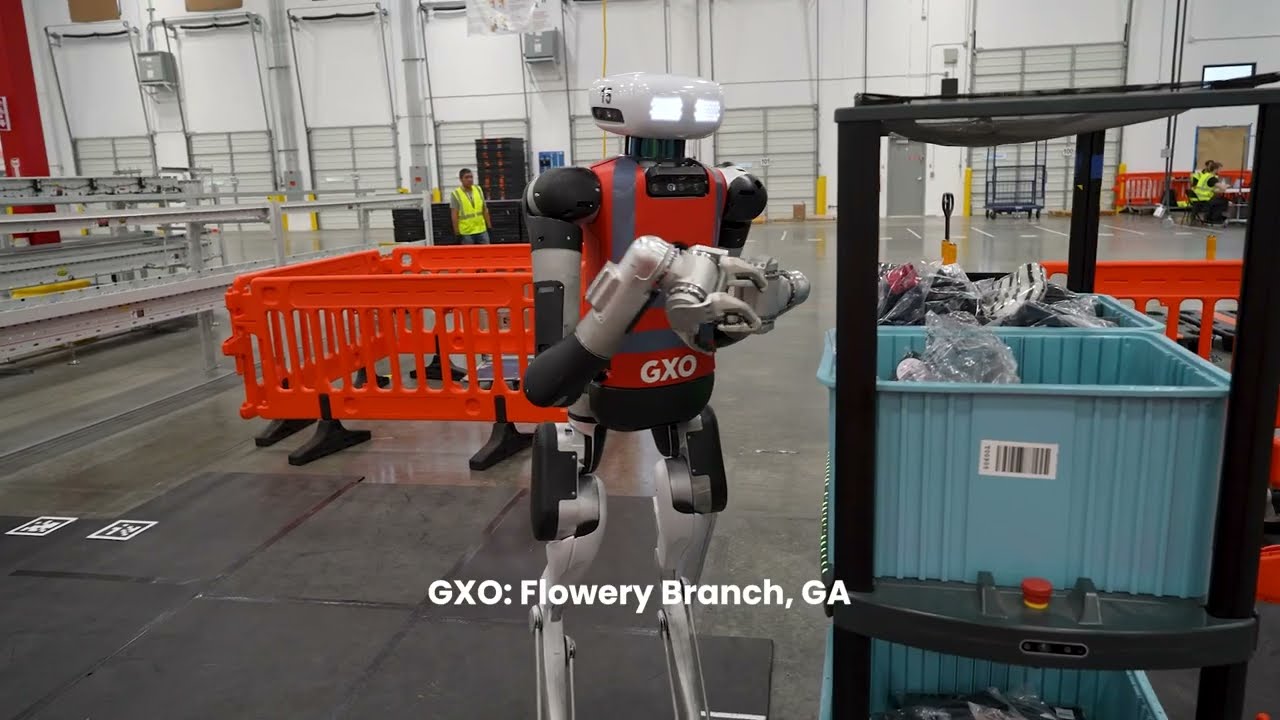
Agility Digit in GXO's live warehouse environment — 100,000+ totes moved in production deployment.
What 88/100 Actually Means
The Geppetto Automation Risk Score for Warehouse Picker / Packer breaks down as follows:
| Component | Score | Weight | Source |
|---|---|---|---|
| Oxford Automation Probability | 91/100 | 35% | Frey & Osborne (2013), updated |
| IFR Deployment Reality | 9/10 | 30% | IFR World Robotics 2024 |
| McKinsey Task Automation Rate | High | 20% | McKinsey Global Institute |
| Geppetto Robot Density Score | 8/10 | 15% | Geppetto Directory |
| Composite Score | 88/100 |
The Oxford score of 91 was high in 2013. What has changed is the IFR Deployment Reality score — 9/10 means this isn't theoretical probability anymore. The robots are deployed at commercial scale. The McKinsey task breakdown confirms that the core warehouse picker tasks — tote movement, scanning, sorting, putaway — are each individually above 80% automatable with current commercial technology.
An 88 composite puts warehouse picking in the same bracket as data entry, toll collection, and automated assembly line work. Professions that have already experienced significant structural displacement over the past two decades. The trajectory is not ambiguous.
Boston Dynamics Stretch — Truck Unloading in Action
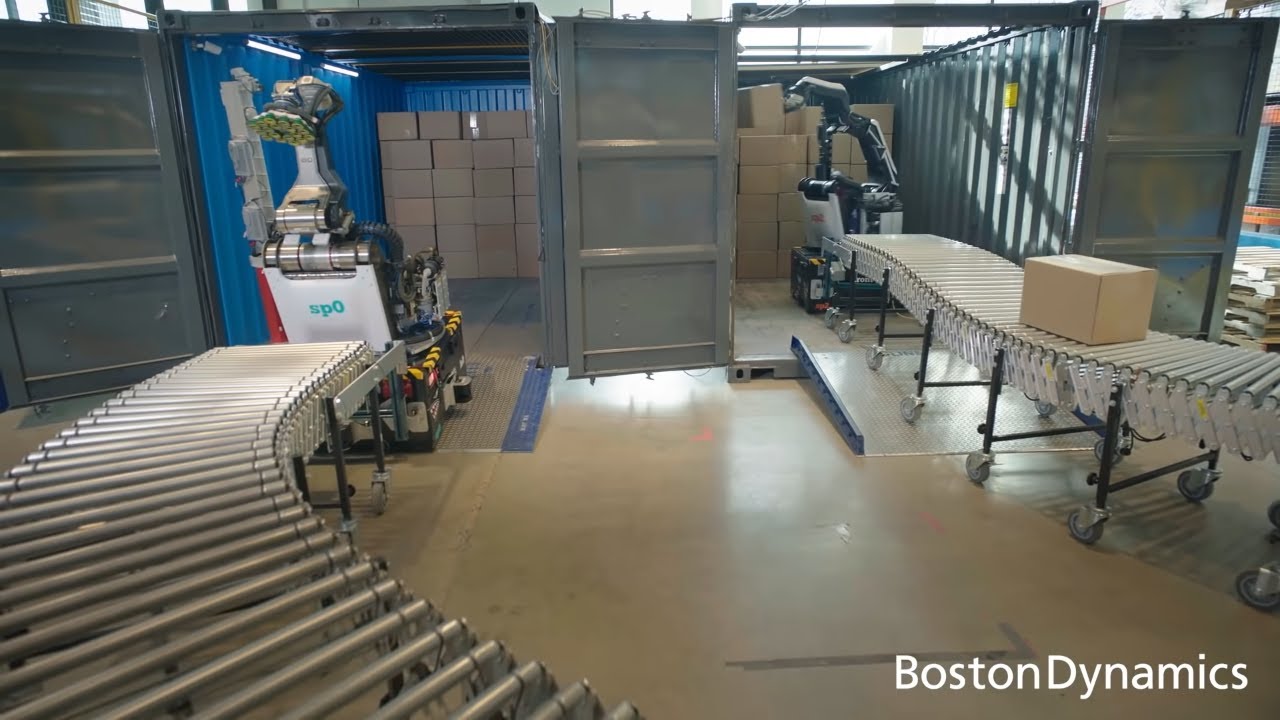
Boston Dynamics Stretch unloading trucks autonomously — up to 800 boxes per hour, handling irregular shapes that stump most robot arms.
Locus Robotics LocusBot Origin — Picker-Assist AMR
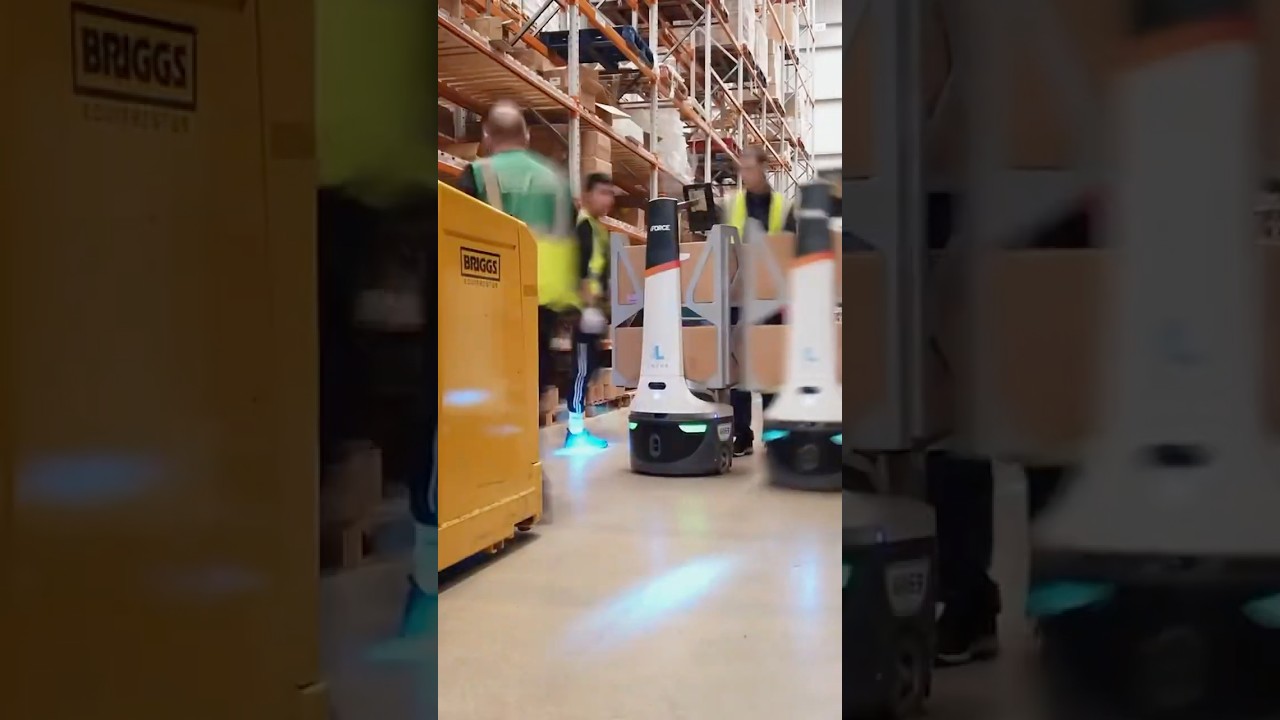
Locus Robotics LocusBot Origin guiding pickers through optimised routes — reducing travel time by up to 50% in live 3PL deployments.
What Robots Are Doing in Warehouses Right Now
This is not a section about prototypes.
Amazon operates more than 750,000 robots across its global fulfilment network as of 2024, including Kiva-derived drive units, Proteus AMRs, and Sparrow robotic arms for individual item picking. The number of human pickers has not increased proportionally with order volume since 2019.
Ocado built its entire warehouse infrastructure around robotics. Its Customer Fulfilment Centres use a grid-based system where hundreds of bots move simultaneously, achieving pick rates that human-only operations cannot match on unit economics. The model has been licensed to Kroger, Morrisons, and others.
GXO Logistics announced a commercial deployment of Agility Digit in a live fulfilment environment in 2024 — not a trial, a production deployment. Over 100,000 totes moved. Digit is a bipedal robot specifically designed to operate in existing human-designed warehouse environments without requiring infrastructure modification.
DHL has deployed autonomous mobile robots across distribution centres in Germany, the Netherlands, and the UK, with AMR-assisted picking reducing picker travel distances by up to 40% and proportionally reducing headcount requirements over natural attrition cycles.
The robots doing the work:
| Robot | Type | Primary Task | Status |
|---|---|---|---|
| Agility Digit | Bipedal humanoid | Tote handling, unstructured environments | Commercial deployment |
| Boston Dynamics Stretch | Mobile manipulation arm | Case unloading, truck unloading | Commercial deployment |
| Locus Robotics LocusBot | AMR | Picker-assist, goods-to-person | Commercial at scale |
| Hai Robotics HAIO | ACR system | High-density storage retrieval | Commercial at scale |
| Geek+ P800 | Goods-to-person AMR | Sortation, pod retrieval | Commercial at scale |
For a direct comparison of the two most capable manipulation platforms in commercial deployment: Agility Digit vs Boston Dynamics Stretch.
Hai Robotics HAIO — High-Density ACR System
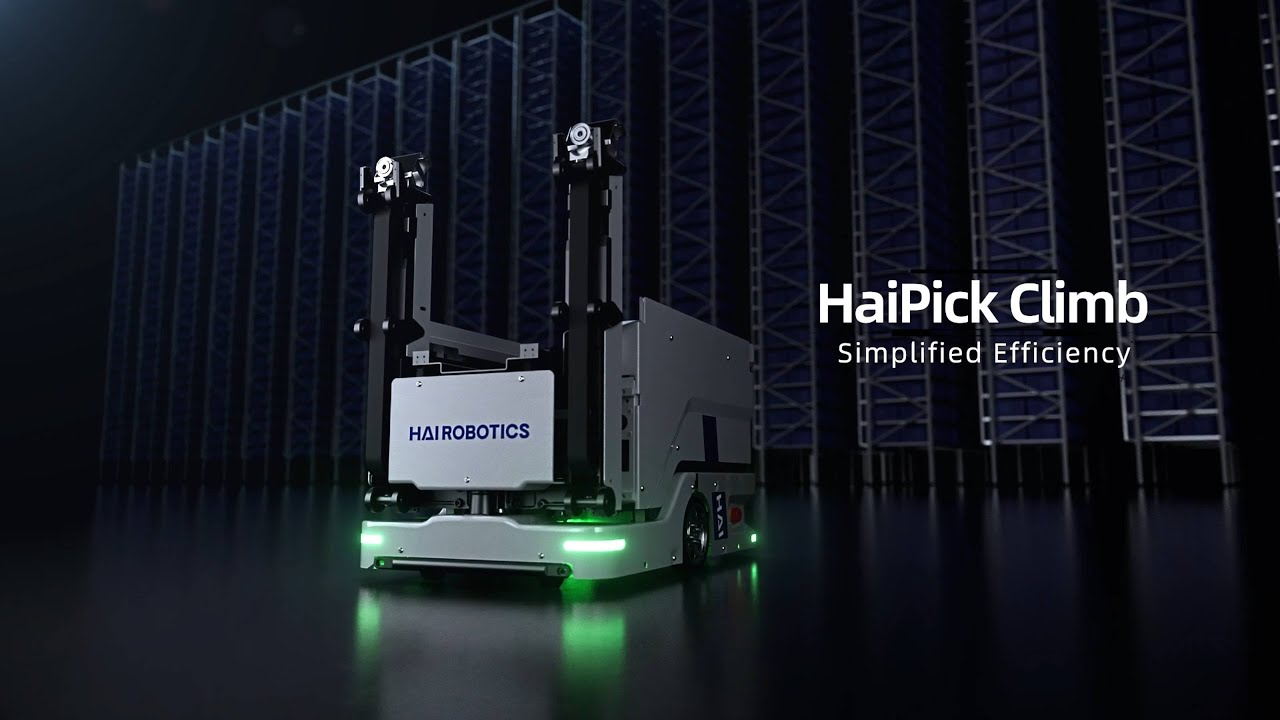
Hai Robotics HAIO reaching 10-metre racking heights — demonstrating the vertical storage density gains replacing human pickers in high-SKU environments.
What Robots Still Can't Do Well
Honesty requires this section.
The capability gap on irregular items is real, and it is underestimated by most analysts. A robot that excels at moving standard totes struggles with the long tail of SKUs found in general merchandise warehouses: soft goods, fragile items, oddly shaped products, items without reliable barcodes, returns processing. The 80%+ automation rate on core tasks does not extrapolate cleanly to 80% of all warehouse jobs, because the remaining 20% of task types can represent 60% of the cognitive exception-handling a picker encounters in a shift.
The human judgment layer on exceptions — damaged goods, ambiguous addresses, customer-specific packing requirements, returns assessment — remains genuinely difficult for current commercial systems. Not impossible. Difficult, and expensive to solve at the long tail.
The cleaning, maintenance, and troubleshooting of the robots themselves creates new roles that require warehouse-adjacent technical skills. These roles exist, they pay more, and they are not accessible without retraining.
The honest summary: the robots handle the high-volume, predictable, structured portion of warehouse work well. The unpredictable, exception-heavy, judgment-dependent portion is the remaining moat — and it is shrinking, not growing.
Geek+ P800 — Goods-to-Person AMR at Scale
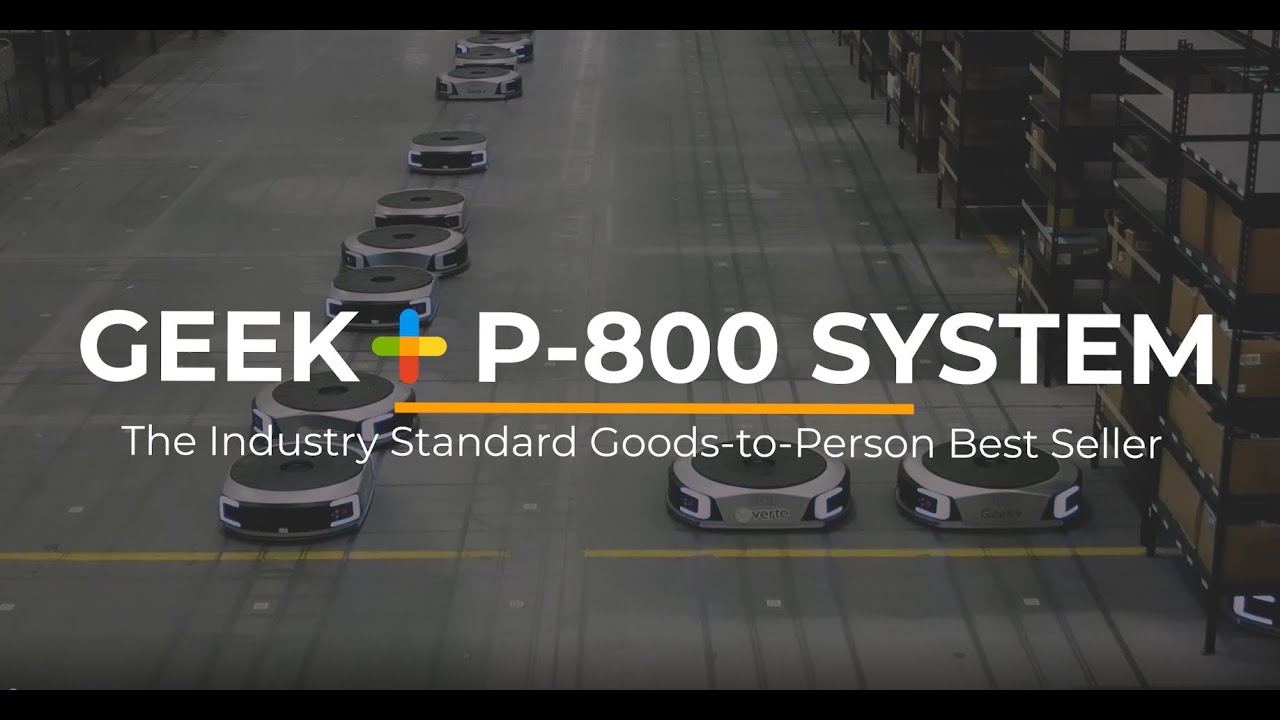
Geek+ P800 goods-to-person system in action — shelves delivered to stationary pickers, eliminating floor travel entirely.
The Transition Reality: 2026–2032
Mass layoffs are not the primary mechanism here. The mechanism is attrition and volume absorption.
E-commerce order volume continues to grow at 10–15% annually in most developed markets. Without automation, that growth would require proportional headcount increases. Instead, the headcount stays flat while robots absorb incremental volume. The warehouse workforce does not shrink dramatically in headline terms — it simply does not grow while the work it used to do does.
The second mechanism is new facility design. Warehouses built from 2024 onwards are increasingly designed around robotic infrastructure from the ground up. Human-optimised layouts — wide aisles, ergonomic reaches, shift schedules — are being replaced by high-density grid systems optimised for machine movement. As older facilities are decommissioned and replaced, the human labour model embedded in those older designs loses its competitive position.
The timeline I would put on full-impact: 2028–2032 for the high-volume structured categories (apparel, electronics, FMCG). Longer for general merchandise with high SKU irregularity.
The 2030 humanoid predictions for full warehouse automation are probably 3–5 years optimistic. The economics work — a $30,000 robot operating 20 hours a day at zero marginal cost beats a $20/hour human picker on unit economics within 18 months. The capability gap on irregular items is the real constraint, and most analyst projections underweight it. This is not a defence of the status quo. It is a more accurate timeline.
What Warehouse Workers Should Do Now
This is not a section where I tell you to learn to code.
The roles that are adjacent to warehouse robotics and growing:
- AMR Fleet Technician — maintaining, calibrating, and troubleshooting the robots themselves. Companies are hiring these roles now, most train internally, and they pay 20–40% more than picker roles.
- Robot Operator / Supervisor — exception handling, escalation management, overseeing robot task queues. A layer that will exist until AI exception-handling matures.
- Warehouse Systems Analyst — using WMS and robot fleet data to optimise routing, throughput, and exception rates. Requires data literacy, not a computer science degree.
- Returns Processing Specialist — the hardest remaining task to automate. Likely to remain human-staffed for the entire forecast period.
The Geppetto Jobs Index scores over 120 professions. The logistics and warehouse sector as a whole shows a gradient: pure repetitive picking is 88/100. Supervisory roles are in the 40–55 range. Technical maintenance roles are below 30.
The direction of safety is toward the robot, not away from it.
Frequently Asked Questions
Will warehouse jobs disappear completely? Unlikely in the short term, and probably not entirely even by 2035. The more accurate framing is that warehouse jobs will decline in number, shift in composition, and require different skills. The highest-risk roles — repetitive picking in structured environments — will see the steepest reduction. The lowest-risk roles — exception handling, robot maintenance, systems management — will grow. Net employment in the sector is likely to fall, but not to zero.
How many robots does Amazon use in its warehouses? Amazon operates over 750,000 robots globally across its fulfilment network as of 2024, including drive units, sorting robots, robotic arms (Sparrow), and autonomous pallet movers. This figure has grown from approximately 200,000 in 2020.
What is the Geppetto Automation Risk Score for warehouse workers? The Geppetto Composite Score for Warehouse Picker / Packer is 88/100, classifying the role as High Risk. This is a composite of the Oxford Automation Probability (91), IFR Deployment Reality (9/10), McKinsey task automation rate, and Geppetto's robot density score across the logistics category.
Which companies have already automated warehouse picking? Amazon (750,000+ robots), Ocado (fully automated fulfilment centres), GXO Logistics (Agility Digit commercial deployment, 100,000+ totes moved), and DHL (AMR deployments across European distribution) are the most documented large-scale commercial deployments as of 2026.
Is Agility Digit actually being used in real warehouses? Yes. GXO Logistics deployed Agility Digit in a production warehouse environment in 2024, moving over 100,000 totes. This is a confirmed commercial deployment, not a pilot. See the full Agility Digit listing or compare it against Boston Dynamics Stretch.
What warehouse jobs are safest from automation? Returns processing, exception handling, robot maintenance and repair, and warehouse systems supervision are the least automatable roles in the current deployment environment. They also, not coincidentally, pay more.
When will warehouse automation reach full impact? For structured, high-volume categories (apparel, electronics, FMCG), the peak impact period is 2028–2032. General merchandise with high SKU irregularity will take longer. The 2030 humanoid predictions you may have read are likely 3–5 years optimistic on full capability deployment, though the economics of automation are already compelling at current capability levels.
Data sources: IFR World Robotics 2024, Frey & Osborne (2013/updated), McKinsey Global Institute — The Future of Work, O*NET Task Importance Ratings, Geppetto Robot Directory (logistics category, April 2026), company press releases (Amazon, Ocado, GXO Logistics, DHL). Last updated: April 2026.
Prices correct at time of publication.